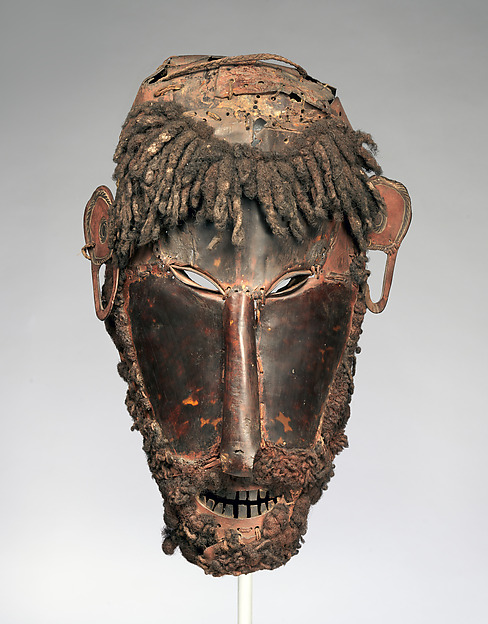
Description before interpretation
Close looking starts with observable features: a cut edge, a joined plate, a polished surface, an applied pigment or a repair. Description is not neutral when terminology is careless, but it can prevent a visual resemblance from becoming an unsupported claim.
The Le Op mask is assembled from shaped turtle shell, hair, fibre and pigment. Those material facts invite questions about specialist knowledge, movement and care, while the museum record provides the documented ceremonial context.
Material is not merely decoration
The Sicán funerary mask combines metal and red pigment; the Calima/Ilama face turns a thin gold sheet into volume; the Roman Egyptian mummy mask builds a painted face from cartonnage and plaster. In each case, making relates the object to a body differently.
Modern monetary assumptions are especially misleading for gold. Archaeological and art-historical sources instead examine colour, reflectivity, durability, rarity, embodied display and deposition.
Credit and uncertainty
Many museum records preserve no individual maker’s name. That absence should not turn craftsmanship into anonymous “tradition.” We identify the recorded cultural context, name an artist when the collection does, and avoid fabricating biographies.
When language, attribution or provenance is disputed or incomplete, the article records that limitation and links readers to the source catalogue for updates.